
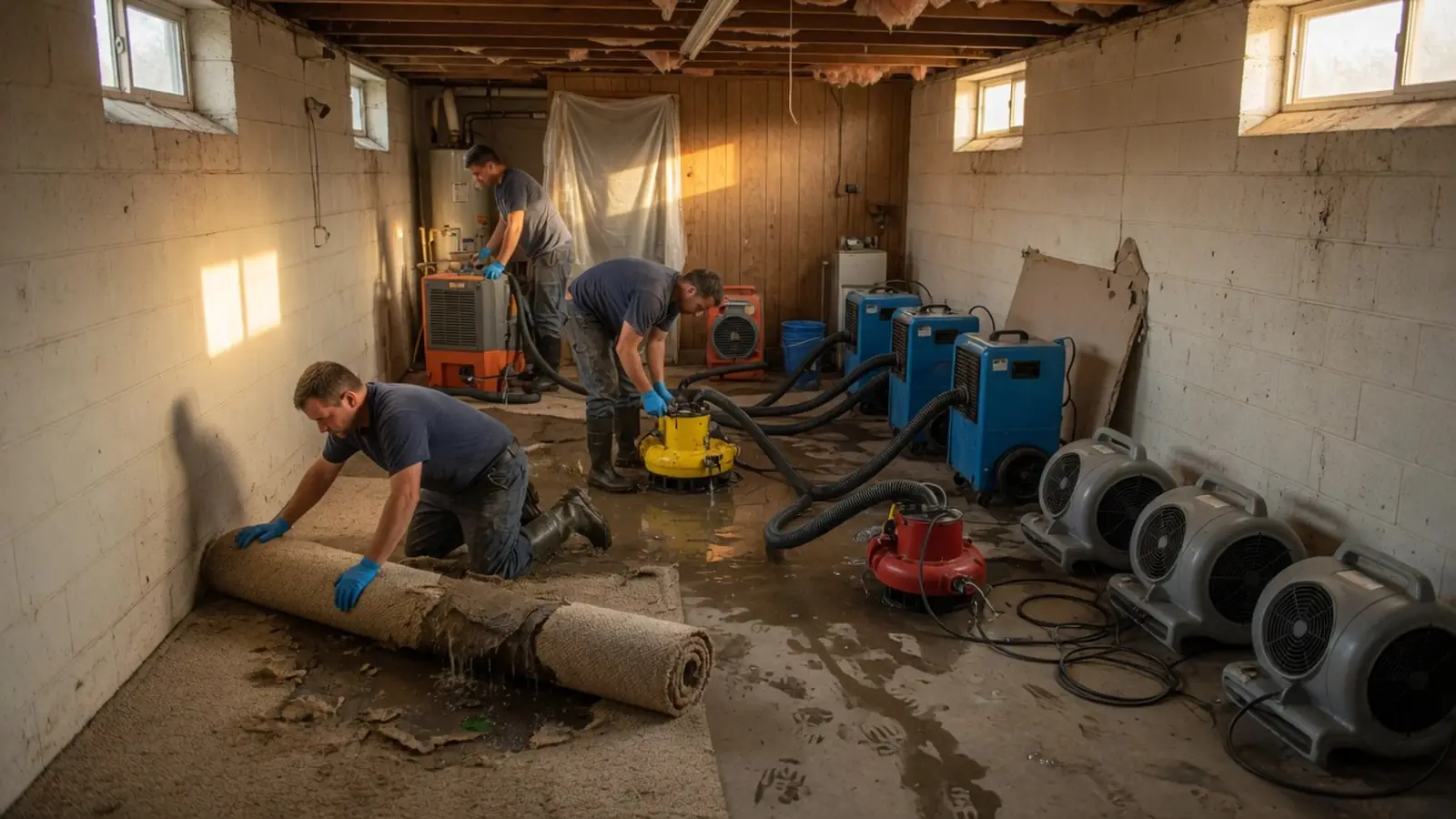
Charleston Crawl Space Water
Persistent standing water and saturated soil accumulate under homes following heavy Lowcountry rainstorms due to shallow water tables. Our rapid response crew extracts pooled water beneath your foundations and deploys specialized drying equipment before wood rot takes hold. We safeguard your structural timber and restore a stable, dry foundation environment.
Call (843) 555-0123 if you're standing in it.
Prefer to talk? (843) 555-0123
Dedicated Crawl Space Restoration
Our crew has spent years navigating the damp crawl spaces of historic and coastal properties across the Lowcountry.
In neighborhood forums, homeowners often describe how warm, humid crawlspace air colliding with air-conditioned subfloors causes hardwood cupping, musty odors, and excessive moisture beneath the living area.
A pattern echoed in public discussions is that property owners struggle to identify whether water pooling under the house originates from ground soil saturation or hidden plumbing pipe leaks.
Our technicians enter the foundation crawlway with calibrated moisture meters to isolate the exact origin of moisture infiltration.
Prolonged high humidity fosters extensive white mold and fungal colonization across subfloor framing and structural floor joists.
Homeowners face major restoration costs when persistent crawlspace moisture requires simultaneous joist repair, mold remediation, and full encapsulation.
When foundational flooding threatens your subfloor, relying on comprehensive water damage mitigation services preserves the structural integrity of your building.
We leave every workspace clean, safe, and fully documented with relative humidity readings before wrapping up our inspection.
How We Dry Your Subfloor
Severe pooling and standing water under homes after heavy rainfall raise urgent concerns about foundation undermining and structural rot. Our phased drying system eliminates trapped liquid, lowers structural timber moisture, and stabilizes the air beneath your living quarters.
- Emergency Pumping And Extraction. Crawl spaces continue to flood despite an active sump pump due to high hydrostatic pressure and overburdened drainage systems. We position submersible trash pumps and high-volume suction lines to drain standing water rapidly, clearing deep floodwater after severe storm surges to protect structural footings.
- Drainage And Moisture Source Isolation. Homeowners question whether installing vapor barriers and dehumidifiers without active ground drainage risks trapping liquid water beneath the house. Our team trenches perimeter gravity channels and inspects hidden supply lines so runoff exits freely before barrier placement.
- Structural Joist Drying And Mold Removal. We place commercial low-grain refrigerant dehumidifiers and directed centrifugal air movers to draw trapped moisture out of framing timbers. When organic growth is discovered on wet lumber, scheduling certified structural mold remediation prevents spores from migrating into living spaces.
- Vapor Retardation And Environmental Monitoring. We lay heavy-duty reinforced puncture-resistant ground vapor liners, sealing seams securely along interior piers and stem walls. Final digital hygrometer readings confirm that equilibrium relative humidity stays at stable, safe levels.
Uncompromising Subfloor Protection
We approach every subfloor water extraction with rigorous attention to detail and uncompromised structural care. Our technicians utilize industrial air movers, commercial desiccant systems, and precision moisture sensors to verify that wood joists reach normal equilibrium moisture content. We treat your property with absolute respect, keeping access points clean and providing honest, transparent assessments at every phase.
Standing Water Pumpout
Rapid extraction of accumulated rainwater, groundwater intrusion, and runoff from beneath your subfloor. We deploy high-output submersible extraction equipment to clear standing water swiftly.
Subfloor Structural Drying
Targeted airflow and commercial dehumidification engineered to extract moisture deep within saturated floor joists, subfloor sheathing, and foundation sill plates.
Crawl Space Ground Drainage
Installation of interior relief trenches and sump basins that channel intruding groundwater safely away before moisture can damage subfloor framing.
Our Approach To Subfloor Water Restoration
Every crawl space flooding scenario requires careful diagnostic inspection, heavy extraction equipment, and thorough drying to prevent long-term timber deterioration. We deliver methodical water mitigation tailored to high humidity coastal environments.
- 15Zip Codes Served
- 6Service Areas
- 3Services Offered
Local property owners rely on our dedicated team when rising groundwater and standing water threaten their subfloor structures. Read genuine accounts from homeowners who experienced our crawl space extraction and drying services firsthand.
“Every single evening before heading out, the crew rolled up their heavy drainage hoses and swept our flagstone patio completely clear. They covered the crawl space hatch securely and kept the industrial drying cords neatly taped down along our driveway so our kids could safely walk around. It was a relief seeing how tidy they left the exterior after dealing with so much muddy water under our house.”
Marcus T.
“When a late Sunday thunderstorm hit, I noticed water pooling near the foundation vents and called their emergency line in a panic. The dispatcher answered on the third ring and walked me through checking our exterior runoff while sending a tech out within an hour. Having someone knowledgeable pick up on a holiday weekend gave us total peace of mind.”
Elena R.
“Inspecting the vapor barrier seams myself after they finished, I was blown away by how precisely every overlap was sealed and wrapped around each support pier. The crew had leveled out the low gravel pockets and secured the membrane tightly against the masonry walls with zero bunching or loose corners. Their attention to detail on the framing drying and plastic fit was extraordinary.”
Darren K.
“My next-door neighbor asked for their contact information the minute she saw our subfloor drying equipment pack up, and I gladly handed over the manager's card. She had been dealing with identical moisture under her ranch house, and I told her how quickly this company pumped our crawl space dry. She booked them the following Monday and thanked me for the recommendation.”
Brenda M.
Frequently Asked Questions
How quickly should standing water in a crawl space be extracted?
Standing water should be extracted within 24 to 48 hours to prevent subfloor timber rot, structural settling, and rapid fungal colonization. Prompt extraction stops moisture from migrating upward into hardwood flooring and insulation materials.
What causes persistent water pooling under coastal Lowcountry homes?
Shallow water tables, heavy storm runoff, and saturated coastal soil allow groundwater to pool underneath foundation footings and subfloors. Plumbing leaks can also contribute, requiring professional diagnostic checks with moisture sensors to identify the exact water source.
How long does the crawl space drying process typically take?
Thorough crawl space structural drying generally takes three to five days once all standing water has been completely pumped out of the space. Drying duration depends on timber saturation, relative humidity, and proper placement of commercial dehumidifiers and air movers.
Why can a crawl space flood even with an active sump pump installed?
High hydrostatic pressure during torrential rainfall can overwhelm sump pump basins and exceed standard perimeter drainage capacity. Silt buildup, power disruptions, and undersized discharge pipes can also cause pumps to fail when water tables crest.
Will installing a vapor barrier alone solve crawl space water problems?
Installing a vapor barrier without active ground drainage risks trapping liquid water beneath the liner, accelerating structural decay. Standing water must be evacuated and channeled through gravity trenches or sump systems before vapor encapsulation is applied.