
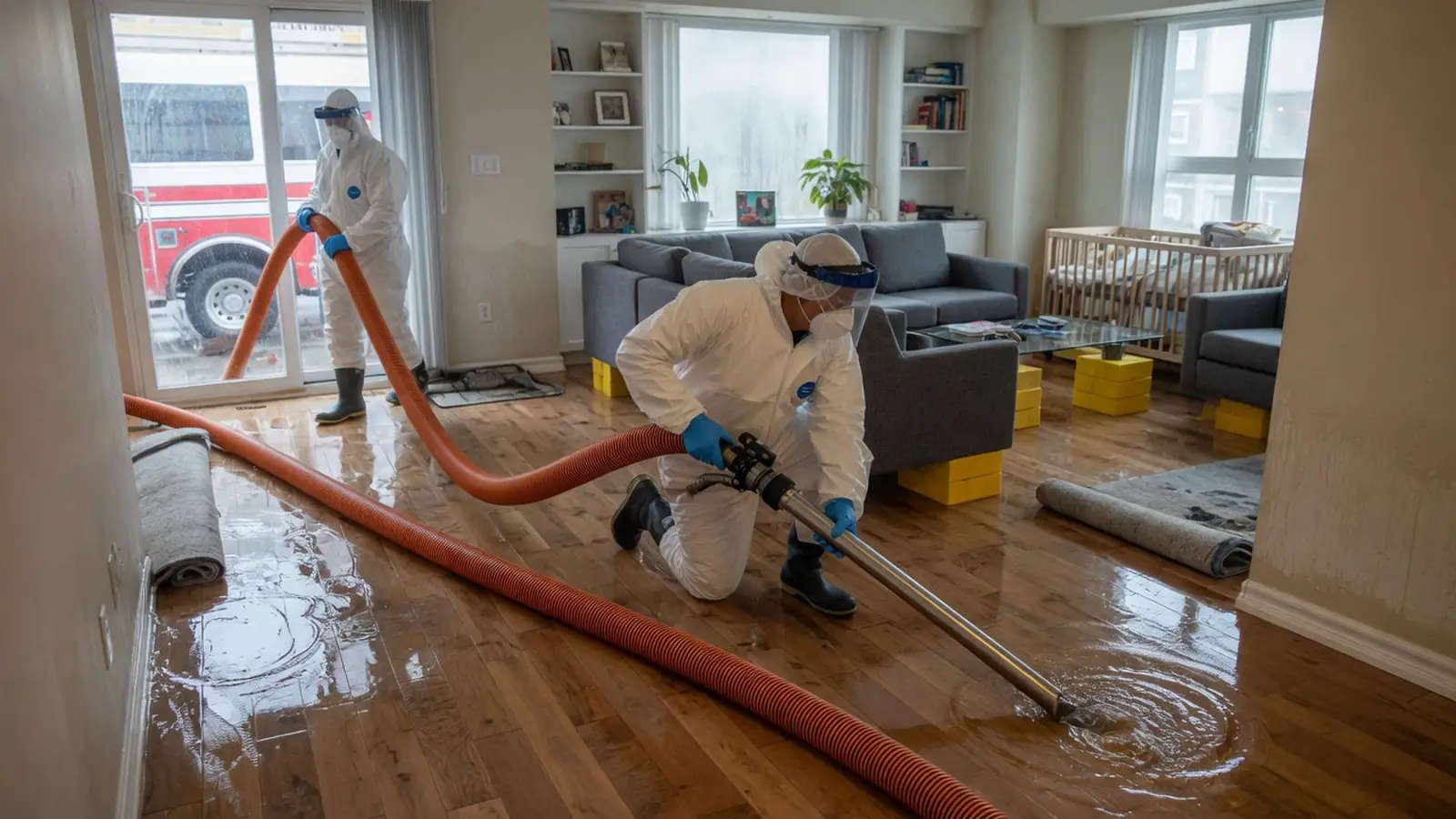
Water Damage Restoration Charleston SC
Persistent standing water and saturated soil accumulate under homes following heavy Lowcountry rainstorms due to shallow water tables. Our certified crew deploys industrial submersible pumps, heavy-duty desiccant dehumidifiers, and thermal cameras to locate hidden moisture and protect structural foundations. We arrive on site rapidly to extract floodwater, dry framing materials, and restore safe living conditions.
For a burst line that's still running, call (843) 555-0123.
Prefer to talk? (843) 555-0123
Dedicated Moisture Recovery Professionals
Our restoration technicians bring specialized structural drying experience to residential properties across the historic peninsula and surrounding barrier islands.
We arrive with commercial-grade extraction units and calibrated pinless moisture meters to assess water migration deep inside subflooring and framing.
Severe pooling and standing water under homes after heavy rainfall raise urgent concerns about foundation undermining and structural rot.
Our crew implements disciplined site containment to isolate affected rooms and keep unaffected living areas immaculate throughout remediation.
You can discover how we extract persistent crawl space water before structural framing suffers rot.
We stand by open communication, walking every homeowner through real-time hygrometer readings before pulling equipment.
Systematic Structural Drying And Recovery
A common pattern echoed in public discussions is that crawl spaces continue to flood despite an active sump pump due to high hydrostatic pressure and overburdened drainage systems. When storm surges or severe pipe ruptures occur, our team provides rapid emergency hurricane surge cleanup to stabilize properties before humidity causes secondary decay.
- Rapid Assessment And Thermal Moisture Mapping. We inspect moisture migration through walls and ensure electrical circuits remain de-energized in flooded zones. About 9% of housing units in the area (6,493 of 74,788) were built in the 1960s, overlapping the years aluminium branch wiring was installed. Our technicians verify thermal imaging readings before positioning drying equipment.
- Standing Water Extraction And Bulk Moisture Removal. Our specialists run truck-mounted extraction units and weighted subfloor rescue mats to remove liquid water from flooring and crawl spaces. Removing bulk moisture mechanically accelerates structural drying rates by dozens of hours. We constantly monitor extraction discharge to verify subfloor saturation levels decline.
- Controlled Demolition And Material Containment. When saturated drywall or ceiling plaster cannot be salvaged, our crew executes clean precision flood cuts under negative air containment. About 48% of regional housing units (35,711 of 74,788) were built before 1980, the period when asbestos-containing materials and lead paint were still in use. We test vintage materials and isolate dust before taking down any compromised assemblies.
- Industrial Dehumidification And Daily Hygrometry. We set up commercial low-grain refrigerant dehumidifiers and centrifugal air movers to draw bound moisture out of studs and sills. Our technicians record daily psychrometric readings, including grains per pound and relative humidity, to track progress. Equipment runs continuously until wood moisture content reaches normal equilibrium.
Our Commitment To Verified Structural Dryout
Homeowners question whether installing vapor barriers and dehumidifiers without active ground drainage risks trapping liquid water beneath the house, so we never encapsulate a crawl space until perimeter trenches and sump basins are operational. We apply targeted antimicrobial treatment and mold remediation to prevent fungal spores from establishing colonies on wet timber. Every project concludes with comprehensive thermal moisture mapping to verify your building envelope has returned to dry standards.
Burst Pipe Water Extraction
Interior pipe bursts represent one of the most frequent sources of sudden structural flooding in local homes. About 19% of housing units across the community (14,444 of 74,788) were built in the 1970s and 1980s, overlapping the years polybutylene supply piping was commonly installed. We deploy commercial dehumidifiers and high-volume air movers to dry saturated cavities immediately.
Sewage Backup And Blackwater Sanitation
Aging waste stacks and corroded plumbing frequently collapse or overflow into ground-level rooms. About 20% of local housing units (14,774 of 74,788) were built before 1960, the era of galvanized steel supply lines and cast iron drains. Our team extracts blackwater, sanitizes contaminated subfloors, and neutralizes pathogens.
Storm Hail And Roof Leak Moisture Recovery
Roof punctures from intense weather drive severe moisture intrusion into attics and drywall. The heaviest recent hail year across our local coverage zone was 2023, with 209 radar hail signatures inside a 15-mile radius. In fact, NOAA radar recorded 679 hail signatures within about 15 miles between 2021-2025 (2021: 157, 2022: 159, 2023: 209, 2024: 78, 2025: 76).
Our Standard For Thorough Structural Restoration
We approach every restoration emergency with scientific psychrometric protocols rather than guesswork. Our technicians monitor temperature, specific humidity, and daily moisture content until building materials reach certified dry standards.
- 18Zip Codes Served
- 6Service Areas
- 3Services Offered
Property owners throughout the coastal region count on our crew for prompt structural dryout and dependable recovery. Here is what local residents share about our communication, cleanliness, and workmanship during emergency water situations.
“When water flooded our downstairs hallway, the crew cut back the wet drywall along a laser-straight horizontal line two feet above the floor. They set up airtight plastic barriers that kept dust completely out of adjoining living areas. The subfloor moisture readings dropped steadily, and their clean seams made the later trim and baseboard reinstallation seamless.”
Marcus B.
“After our kitchen supply line burst, they gave us an itemized estimate that detailed equipment placement and daily monitoring fees. The final invoice matched the written quote to the exact dollar without a single hidden line item or surprise change order. Dealing with our insurance adjuster went smoothly because every fee had already been transparently documented.”
Elena V.
“Every afternoon before packing up, the technicians swept all work areas, taped down heavy-duty power cords, and emptied the dehumidifier drain containers. They hauled away ruined insulation promptly so our driveway was never blocked by debris piles. That consistent daily order kept our home safe and livable for our dogs throughout the drying process.”
Garrett K.
“I received timestamped moisture map photos every morning before heading into work without ever having to follow up. The project lead texted daily relative humidity readings and explained precisely how much structural framing had dried out overnight. Knowing where everything stood hour by hour took immense stress off my family.”
Nadine T.
Frequently Asked Questions
How quickly should water restoration begin after a pipe break?
Water mitigation should begin within 24 to 48 hours to prevent microbial growth and avoid permanent warping of structural subflooring and framing. Immediate extraction halts moisture spread into baseboards and drywall cavities.
What structural hazards exist in older regional homes during water drying?
About 48% of regional housing units (35,711 of 74,788) were built before 1980, the era when asbestos materials and lead paint were still widely used. When invasive drying or flood cuts are necessary, our crew isolates work zones under negative air pressure to avoid disturbing hazardous legacy materials.
Why do older plumbing lines in this area frequently fail and cause leaks?
About 20% of local housing units (14,774 of 74,788) were built before 1960, the era of galvanized steel supply lines and cast iron drains. Over decades, interior corrosion narrows pipe diameter, creating pinhole leaks or sudden sewer line collapses that inundate crawl spaces and lower living levels.
Why do crawl spaces flood even when a sump pump is running?
Crawl spaces continue to flood despite an active sump pump due to high hydrostatic pressure and overburdened drainage systems during heavy rain. If discharge lines become overwhelmed or soil saturates rapidly, groundwater seeps through foundation perimeter footings faster than a standard pump can evacuate.
Can you install a vapor barrier before resolving ground water intrusion?
Homeowners question whether installing vapor barriers and dehumidifiers without active ground drainage risks trapping liquid water beneath the house. A vapor barrier should only be sealed after exterior grading, French drains, and sump collection systems properly divert bulk liquid water away from structural piers.